| |
Often referred to as the
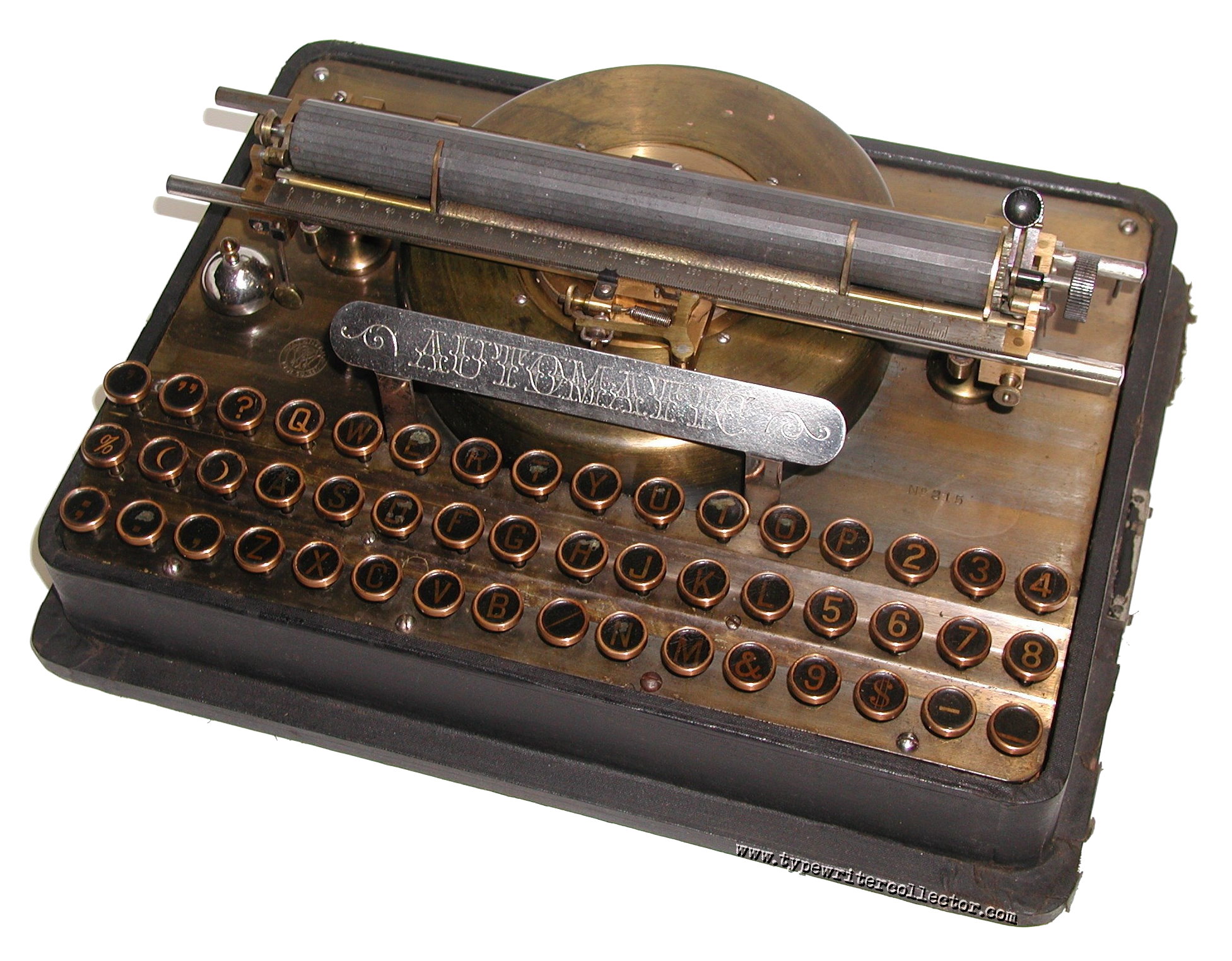
Hamilton Automatic, the Automatic Typewriter was
patented by Emery M. Hamilton of New York in 1887 and placed on
the market in 1888. It was manufactured almost entirely of
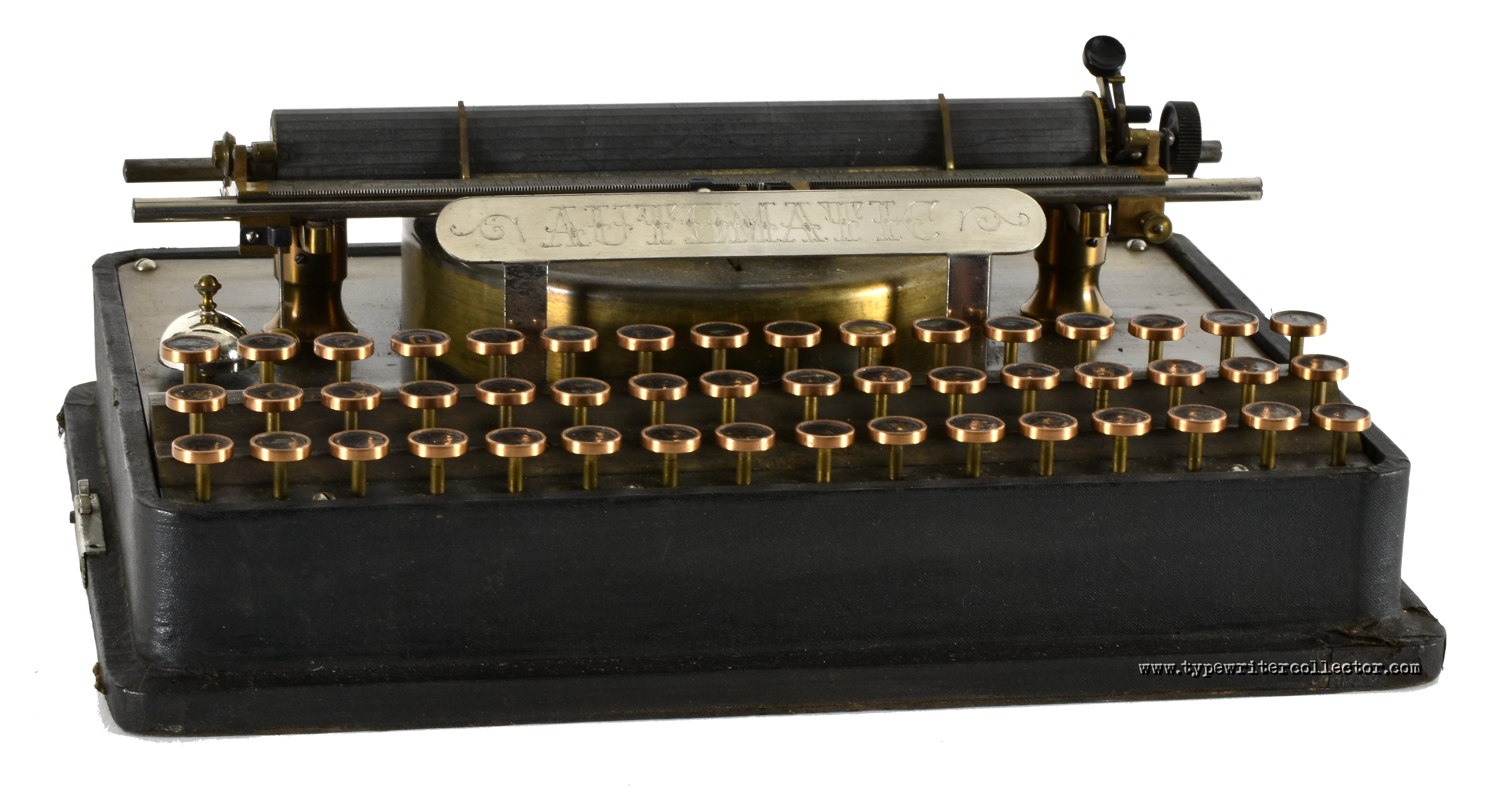
brass and was remarkably small, measuring only 11" wide x 8"
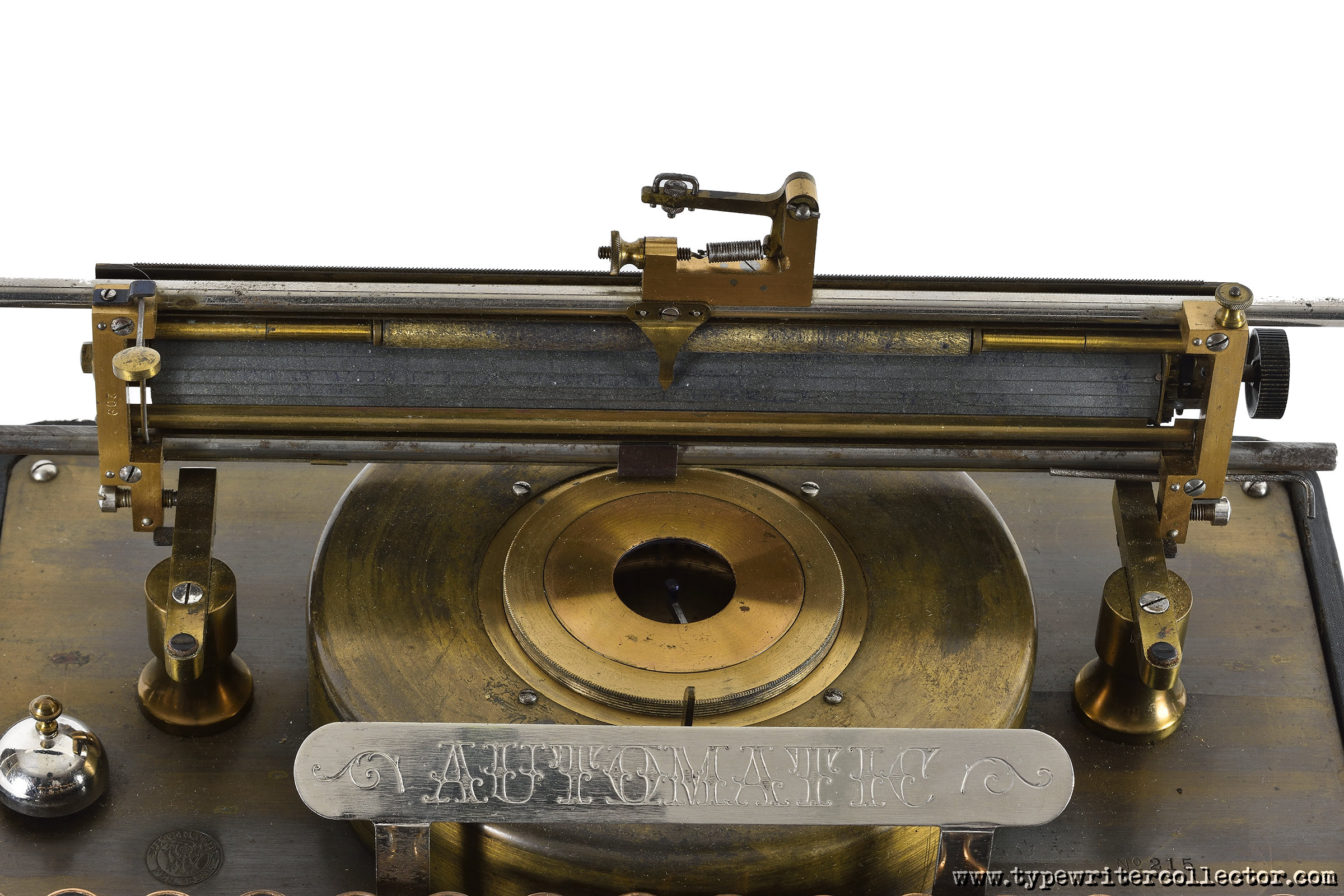
deep x 4" tall. Inside its diminutive chassis are
tiny typebars approximately 1.5" long along with a circular
inkpad inking system. The spacebar is located above the
top row of the keyboard with its name, AUTOMATIC, engraved in
it. It was equipped with 48 keys and typed in
capital letters only. Numbers were located on the right
side of the keyboard, similar to a ten key numerical keyboard on
many modern computer keyboards.
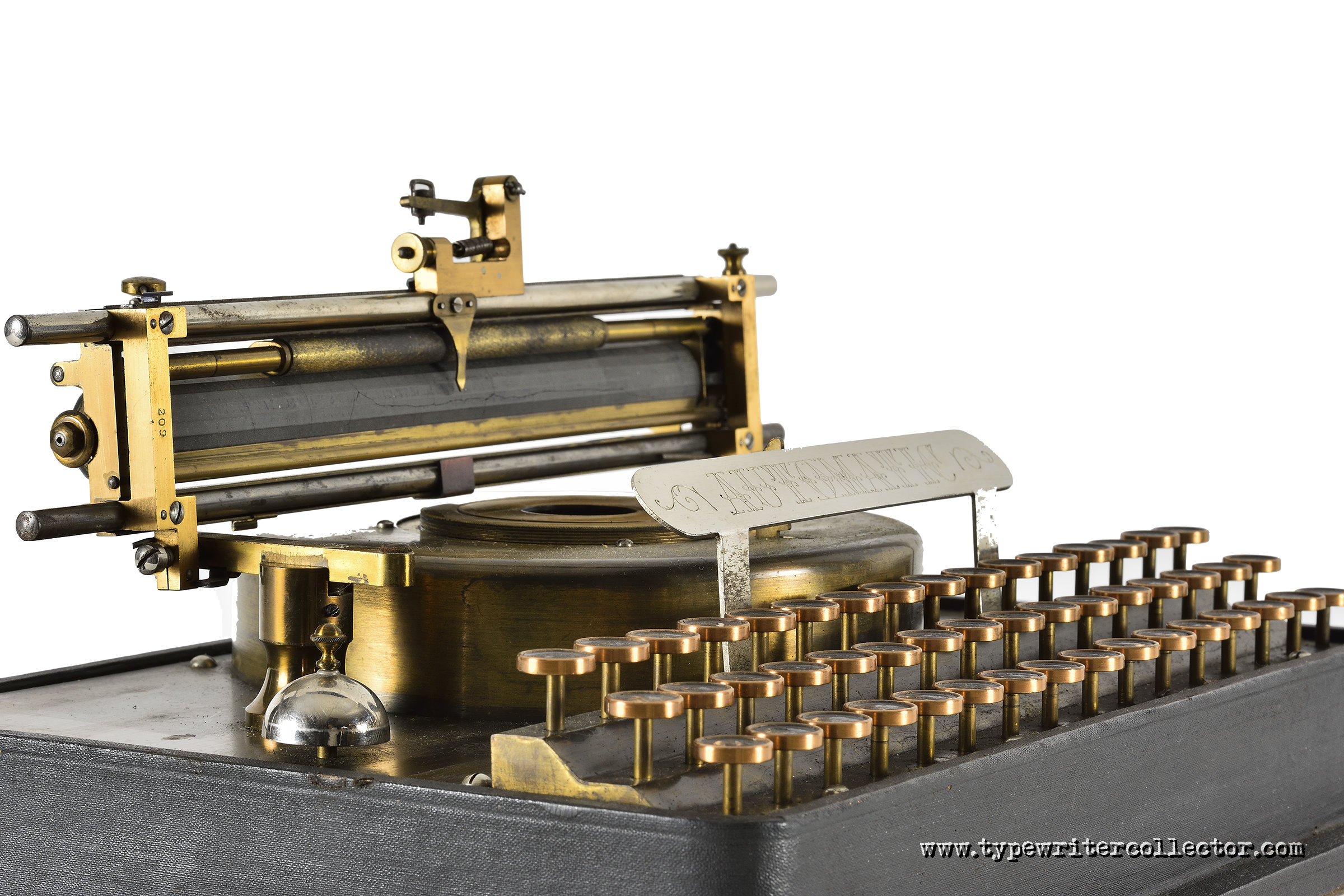
Other noteworthy features include a faceted platen (a round
roller with flat spots uniformly spaced around the entire
roller) to aid in printing characters evenly. It also
included variable spacing, meaning its carriage advanced
further for wider characters and less for narrow
characters. Most typewriters of this era used mono
spacing, meaning each character occupied the same amount of
space across the writing line. This advanced design was
intended to produce work that resembled printed material.
Competition was fierce in the early years of the typewriter
industry and sales of the Automatic did not materialize as
planned. The Automatic was withdrawn from the market in
1891 when stockholders of the company refused to invest further
and the factory was closed. Emery M. Hamilton was on track
to creating a novel and unique typewriter, if not with the
Automatic, possibly with what was to follow.
There is evidence of Hamilton working on other promising
typewriter designs, none of which were formally marketed or have
survived.
Approximately three hundred of these charming typewriters were
manufactured. Very few have survived, making the Automatic
typewriter a very rare and desirable object. If you have
or know of one, I would like to hear from you.
|
|

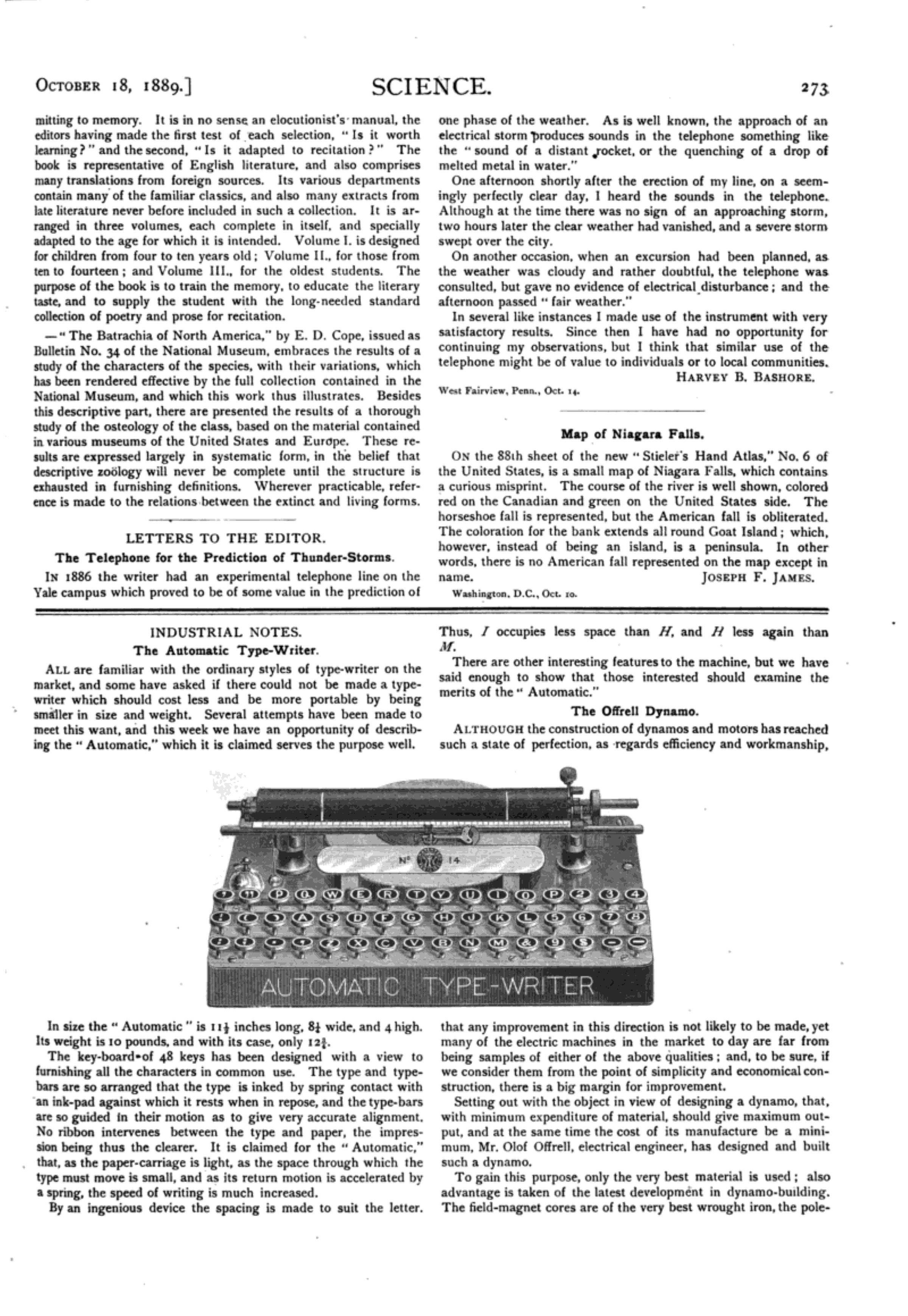
AUTOMATIC TYPEWRITER